Phone Distraction Explained: Reclaim Focus in 7 Days
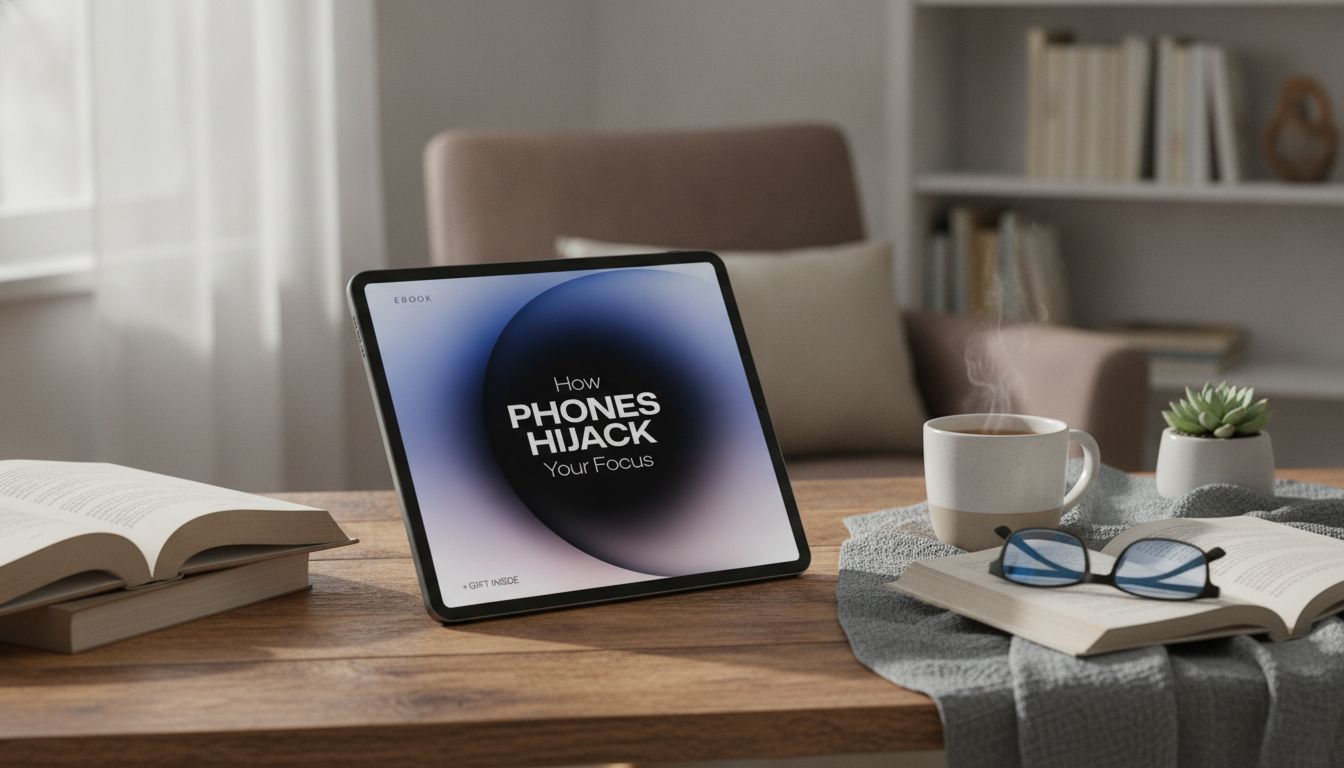
How Phones Hijack Your Focus (and Why It Feels So Different Now)
Smartphones aren’t “just tools” anymore—they’re environments built around alerts, novelty, and frictionless switching. That design turns what used to be quiet pauses (waiting in line, walking to the kitchen, a slow moment between tasks) into scanning moments. Over time, fewer mental breaks means less recovery, shallower thinking, and a creeping sense that focus is harder to access on demand.
The good news is that distraction isn’t a character flaw. It’s often a predictable response to cues, rewards, and context. Once those drivers are visible, it becomes easier to rebuild attention with small, structural changes—without trying to white-knuckle willpower all day.
Why attention feels harder to hold than it used to
- Idle moments became “check” moments. Constant availability fills micro-gaps with input, leaving fewer restorative pauses for the brain to reset.
- Task-switching leaves “attention residue.” After jumping to a message, feed, or notification, part of your mind stays attached to it even when you return to the original task.
- Unpredictable rewards keep you coming back. New messages, likes, and headlines arrive on variable schedules—an engine that encourages repeated checking.
- Convenience stacks distractions behind one screen. Camera, chat, games, work apps, and the entire internet live behind the same glass, making switching effortless.
What’s happening in the brain during phone-driven distraction
Phone-driven distraction isn’t just “lack of discipline.” It’s a mix of learning loops, attention capture, and limited mental bandwidth.
- Dopamine supports learning and motivation. Variable rewards can strengthen checking loops even when the payoff is tiny—because the brain learns that “maybe this time” could be rewarding.
- Salient cues pull attention automatically. Sounds, vibrations, banners, and badges can trigger orienting responses before conscious choice fully kicks in.
- Working memory is limited. Each interruption forces you to reload context (where you were, what you were doing, what comes next), raising errors and slowing complex thinking.
- Stress and fatigue reduce inhibitory control. Later in the day, you’re more vulnerable to distraction—not because you “care less,” but because control systems are worn down.
- Constant switching trains scanning. When your day is built around quick shifts, your brain gets practice at short bursts rather than sustained focus.
For a research-backed overview of switching costs and why multitasking often degrades performance, see the American Psychological Association on multitasking and Stanford Medicine’s summary on multitasking and attention.
Common “focus traps” built into modern digital habits
- Notification clutter: Non-urgent alerts masquerade as urgent prompts, training the brain to treat everything as actionable.
- Badge anxiety: Unread counts create a sense of incompleteness, nudging you to “clear” them even if the content isn’t important.
- Infinite feeds and autoplay: With no natural stopping cues, sessions run longer than intended and make it harder to disengage cleanly.
- Social reciprocity pressure: Fear of seeming rude pushes instant replies, even during deep work or family time.
- Work-chat spillover: Even after a thread ends, partial attention lingers—your mind keeps listening for the next ping.
Warning signs your attention is being hijacked
- Compulsive “just checking” without a clear purpose.
- Difficulty reading long-form content without grabbing the phone.
- Starting tasks feels hard, but switching tasks feels easy.
- More time spent organizing productivity tools than doing the work.
- End-of-day mental exhaustion with little meaningful progress to show.
A practical focus recovery plan that doesn’t rely on willpower
1) Reduce cues first
2) Add friction to checking
3) Protect deep work blocks
4) Create a catch-up cadence
5) Replace the habit loop
6) Build recovery
7-Day Focus Reset (simple daily actions)
| Day | Environment change | Focus practice | Check-in question |
|---|---|---|---|
| 1 | Turn off all non-essential notifications | One 25-minute phone-free work block | What triggered the first urge to check? |
| 2 | Remove social apps from the home screen | Two 25-minute blocks with 5-minute breaks | Did removing cues reduce urges? |
| 3 | Set two message-check windows | One 45-minute deep work block | How often did messaging thoughts appear? |
| 4 | Put phone in another room during focus | One 60-minute block + short walk break | Was focus easier with distance? |
| 5 | Enable grayscale or reduce screen brightness | Two 45-minute blocks | Which apps felt less “magnetic”? |
| 6 | No phone for the first 30 minutes after waking | One 90-minute block (or 2×45) | How did the morning feel different? |
| 7 | Choose 3 rules to keep long-term | Repeat best-performing routine | Which changes gave the biggest payoff? |
Designing a phone relationship that supports productivity
For deeper guidance and ready-to-apply routines
- How Phones Hijack Your Focus – Digital Guide on Phone Distraction, Productivity, Attention, Focus Recovery, Brain Science & Modern Digital Habits (practical routines, boundary design, and focus recovery plan)
- Avoiding Etsy Costly Pitfalls – The Complete Seller’s Guide for Beginners (helpful if notifications and constant checking are tied to selling, messaging, and order updates)
- The Real Story Behind Oral Hygiene Timing | Smart Dental Care Guide (a simple way to reinforce routines—small daily structure can support better attention, too)
FAQ
How long does it take to rebuild focus after constant phone distraction?
Many people notice improvements within days after reducing cues like notifications and badges. Bigger gains typically show up over a few weeks as your routines stabilize and recovery factors like sleep and stress improve.
Is multitasking on a phone actually hurting productivity?
Yes—frequent switching adds time and errors because your brain has to reload context each time. Messaging while writing, studying, or sitting in meetings can leave “attention residue,” making it harder to do high-quality work even after you switch back.
What are the simplest settings changes that help immediately?
Disable non-essential notifications, remove app badges, and use Focus modes or Do Not Disturb during work blocks. Putting your phone out of reach and setting scheduled check windows are also quick changes that reduce reflex-checking right away.









Leave a comment